Landscape with Tree Swing Cross Stitch Review
As an embroidery designer who has spent years translating digital concepts into tangible, stitched reality for small businesses, I approach every new Cross Stitch Patterns file with a critical eye. We aren’t just looking for something pretty; we are looking for viability. Does it hold up on a cap? Does it read clearly as a chest logo? Can it be scaled down without losing its soul? Today, I am reviewing the Landscape with Tree Swing Cross Stitch, a design that promises a rustic, nostalgic charm. This review focuses strictly on its application for branded merchandise, embroidered patches, and commercial use, helping you decide if this Graphics asset belongs in your production workflow.
First Impressions: Visual Personality and Brand Fit
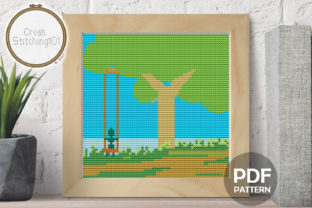
The title alone sets a specific tone. "Landscape with Tree Swing" evokes feelings of nostalgia, simplicity, and organic living. When I first analyze a design like this, I look for its emotional resonance. For a small business, this aesthetic aligns perfectly with brands that value heritage, nature, and handmade authenticity. It feels friendly yet professional, avoiding the overly corporate stiffness of geometric logos while maintaining enough structure to be recognizable.
This design is not bold or aggressive; it is elegant and classic. It suggests a brand that cares about details and quality. For a boutique florist, a local bakery, or a handmade jewelry shop, this visual personality communicates trust and warmth. It is decorative but not cluttered, which is a crucial balance when designing for small business merch. The cross-stitch style inherently adds a layer of texture and "handmade product" value, even if the final output is machine-embroidered. It tells the customer that someone cared about the creation process.
Real-World Application in Business Merchandise
Let’s move beyond the screen and talk about production. How does the Landscape with Tree Swing Cross Stitch perform when translated into physical goods? Here is where my experience as a designer becomes vital.
Embroidered Patches and Brand Identity
The most common use case for this type of design is the embroidered patch. The 70 x 70 stitch count (as noted in the pattern details) provides a manageable canvas for a standard patch size. When digitized correctly, this design can serve as a powerful anchor for your brand identity. Imagine a leather tag on a tote bag featuring this swing landscape. It creates a focal point that invites curiosity. Customers often engage more deeply with designs that tell a story, and a tree swing naturally suggests leisure, comfort, and community—values many lifestyle brands want to project.
Apparel and Uniforms
For staff uniforms, particularly in creative studios or cozy cafes, this design works beautifully as a subtle accent. Placed on the left chest of a work shirt or the cuff of an apron, it adds personality without overwhelming the wearer. Apron embroidery is a huge trend for bakeries and crafters, and a landscape motif fits seamlessly into a kitchen environment. It feels at home amidst flour, wood, and greenery. Similarly, cap embroidery can benefit from this design if simplified slightly. A smaller version on the front panel can signal a relaxed, approachable brand culture.
Tote Bags and Packaging Accents
Tote bag design opportunities are endless for this asset. Because the design is centered and balanced, it prints and stitches well on the large flat surface of canvas bags. It also serves as an excellent detail on product packaging. A small stitched label inside a garment or on a gift box elevates the perceived value of the item. It transforms a generic product into a curated experience, directly impacting customer trust and recognition.
Strategic Considerations and Limitations
No design is perfect for every application. As a professional, I must highlight where the Landscape with Tree Swing Cross Stitch might face challenges.
- Small Patch Sizes: If you plan to reduce this design significantly for tiny lapel pins or miniature tags, you may lose detail. The intricate lines of the tree branches could merge together if the scale is too small. Always test at 50% size before committing to production.
- Curved Surfaces: While caps and hats are great candidates, ensure the digitization accounts for curvature. Flat designs can pucker on curved surfaces if the underlay is not properly set.
- High Stitch Density: Cross-stitch patterns can sometimes result in higher thread usage. Check the stitch density of the final file. Too much density on lightweight fabric can cause puckering, especially on apron embroidery made from thin cotton.
- Fabric Texture: This design relies on clean lines. On highly textured fabrics like heavy tweed or bouclé, the definition might get lost. Stick to smoother fabrics like twill, denim, or canvas for the best results.
- Dark Uniforms: Ensure there is sufficient contrast between the thread colors and the background fabric. If the landscape uses light greens and blues, they may disappear against dark navy or black shirts.
Technical Notes for the Embroidery Designer
Before you send this to production, follow these practical steps to ensure quality control.
- Test in Black and White: Print the pattern in grayscale. If the shapes do not read clearly without color, the design lacks strong silhouette integrity.
- Check Hoop Size: Confirm that the final digitized size fits within your standard hoop limits. The description mentions a size of 12.73 x 12.73 inches, which is quite large. You will likely need to resize this significantly for most standard commercial projects.
- Review Thread Colors: The pattern uses DMC 11 colors. Evaluate if these specific shades match your brand palette. You may need to substitute threads to maintain visual consistency across your product line.
- Inspect Spacing: Look closely at the negative space. Are there areas where the stitches are too close, risking thread breaks? Or too far apart, leaving gaps?
- Use Proper Stabilizer: For a design of this nature, a cut-away stabilizer is usually recommended to prevent distortion over time, especially for items that require frequent washing.
- Create a Mockup: Never guess how it will look. Use a printable mockup or stitch out a sample on the actual target fabric. Compare it beside other design assets to ensure it fits the overall aesthetic.
Conclusion: Is It Worth the Investment?
The Landscape with Tree Swing Cross Stitch is a strong candidate for businesses aiming to project a warm, authentic, and high-quality image. It excels in commercial embroidery applications where a touch of rustic elegance is desired. Whether used as a chest logo, a tote bag statement, or a branded patch, it adds significant value to the finished product.
However, success depends on proper execution. Resize carefully, choose the right fabric, and verify all technical details. By treating this digital embroidery file with the respect it deserves, you can create merchandise that not only looks beautiful but also strengthens your brand identity and drives engagement. Always confirm commercial licensing before using any design for profit, and enjoy the process of bringing this charming landscape to life.